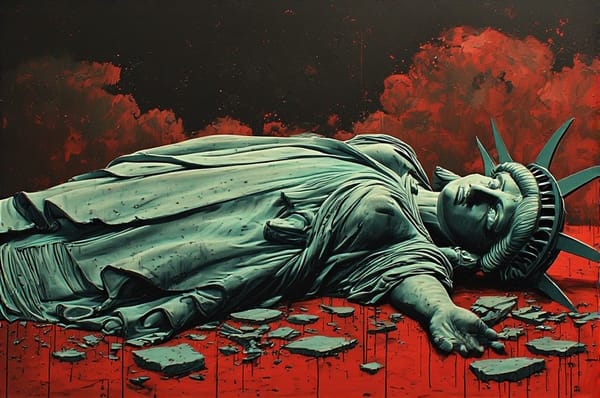
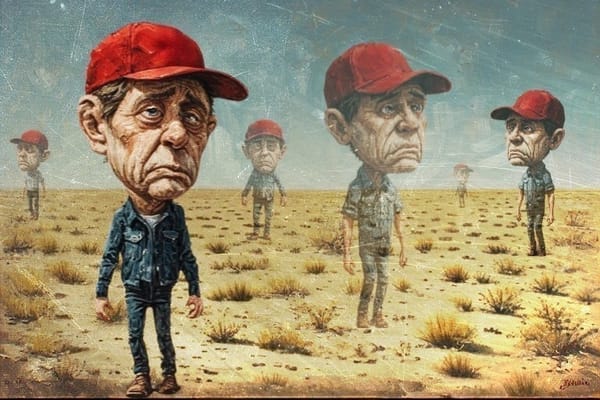
The Broken Love the Camera...
And the Camera Loves the Broken.





The Broken…
The frame opens tight: a lectern, lighting that of a cheap motel, or porn set, the holy hush of HVAC.
Someone has dimmed the bulbs to grief-setting two.
She stands beside the empty chair where the sermons once came to life. Her voice drones on cue, professionally, like a weather alert.
The makeup team earned its overtime.
Every lash in formation, contour unflinching under the spotlight’s warmth. The camera waits for the tear that refuses to fall, patient as a shareholder meeting.
There’s a ritual now: eyes heavenward, the pious squint, a single dab with the tissue. Cut. Reset. Continue.
If grief deforms, this version refines.
Her face could double as the product shot for the mascara she’s not crying off. The tremor never escapes the diaphragm. Emotion remains strictly upper-facial.
Behind her, the relics: the chair, the logo, the ghost of a man who once monetized wrath. Everything in its place, like a museum exhibit on moral entrepreneurship.
The viewers mistake composure for courage; investors call it stability; the faithful call it prophecy.
Only the lens knows the difference. It can spot the light source that isn’t divine.
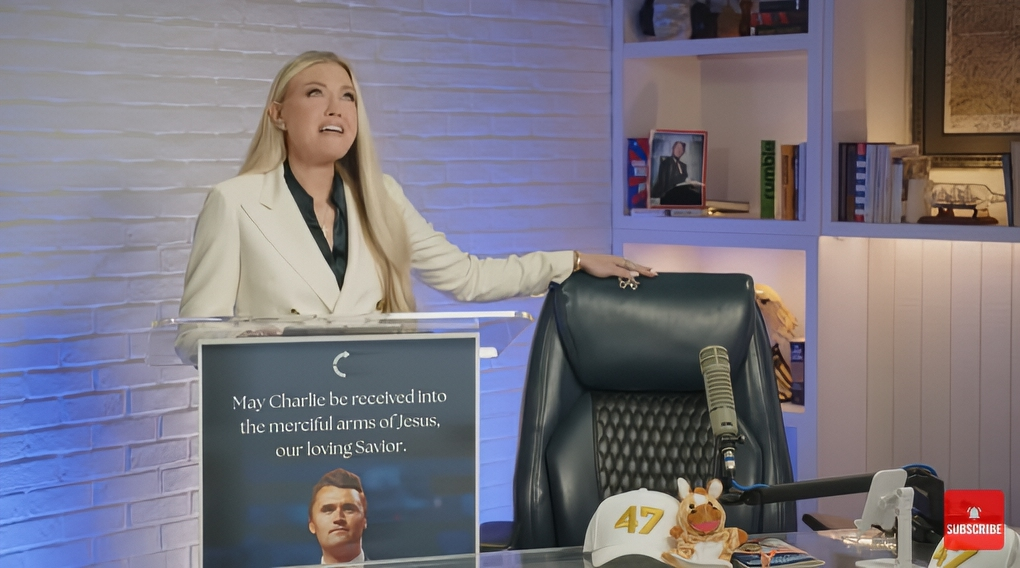
The camera caught the performance; the grief missed its cue.
The Apostate…
Before the hymns and hashtags, before the halo of martyrdom, Charlie Kirk was a man with a microphone and a grudge.
He discovered that rage paid better than reverence. Faith was fine, but fury had better margins.
He wrapped old prejudices in new slogans, called it tradition, and watched the donations roll in. It wasn’t theology, it was branding with a side of brimstone.
Every enemy he named came with a discount code.
He didn’t preach; he marketed. Each sermon was a quarterly report, each altar call a mailing list expansion.
The faithful shouted Amen, the accountants whispered hallelujah.
When he toured the schools, it wasn’t ministry, it was recruitment. The students thought they were debating; he was just beta-testing his next talking point.
Between performances, he signed autographs on hats that promised salvation, greatness and limited-edition nationalism.
He made enough money to prove God loved him, or at least loved compound interest.
Even his haters were useful: every protest outside his venue meant more clicks, more outrage, more media coverage, more proof of divine persecution.
He called it proof that he was over the target. The rest of us called it selling hate.
And when the day came that the noise stopped, the empire didn’t crumble; it rebranded.
Death, after all, is just a hard pivot to legacy merchandising.
A narcissist’s tragedy isn’t the pain itself, it’s that someone might look away before the climax.
The Dividend…
The headline broke before the pulse did.
By the time the sirens found the street, the news cycle had already moved in, wiped its feet, and set up a merch booth.
The networks called it “a tragedy.” Republicans called it war. Trump had another stroke. Jesse Watters wanted blood. The marketing department called it “an opportunity,” and everyone else called it a fucking Wednesday.
By dusk, Kirk’s cult of Christofascists were crashing under the weight of piety and pre-orders. Commemorative mugs, hoodies, bracelets, all limited edition, just like him.
The widow’s team sent out a press release thanking supporters for their “outpouring of love,” which is how the righteous pronounce cash flow.
Sympathy became a subscription model.
The faithful prayed in the comments section, posted candle emojis, and hit add to cart.
Redemption was temporarily out of stock, but pre-orders were available.
Investigators called it politically motivated. Pundits called it a spiritual war. The stockroom called it Q4.
And as the memorial hashtags trended, a thousand copywriters earned their daily bread rewriting the Beatitudes for ad copy.
Blessed are the bereaved, for theirs is the engagement spike.
By midnight, the empire wasn’t mourning, it was scaling.
He’d finally done the impossible: turned mortality into a growth strategy.
A narcissist preaches not to convert, but to hear their own echo bounce off a crowd.
The Widow…
The memorial wasn’t a service; it was a fucking three-ring circus. P.T. Barnum would feel the kind of envy a child feels when their sibling gets a new toy, seething.
Security wands and photo ops, vendors sold sanctity by the cup.
The stage crew must have mistaken heaven for Vegas
The program read like a campaign flyer that had misplaced its polling data.
From the stage came speeches engineered for viral clarity, and subversive incitement:
“Faith,” “Freedom,” “Legacy,” each word dropped like a keyword in a search engine for salvation.
They spoke of courage, sacrifice, destiny, anything but consequence.
Every phrase tested well with donors.
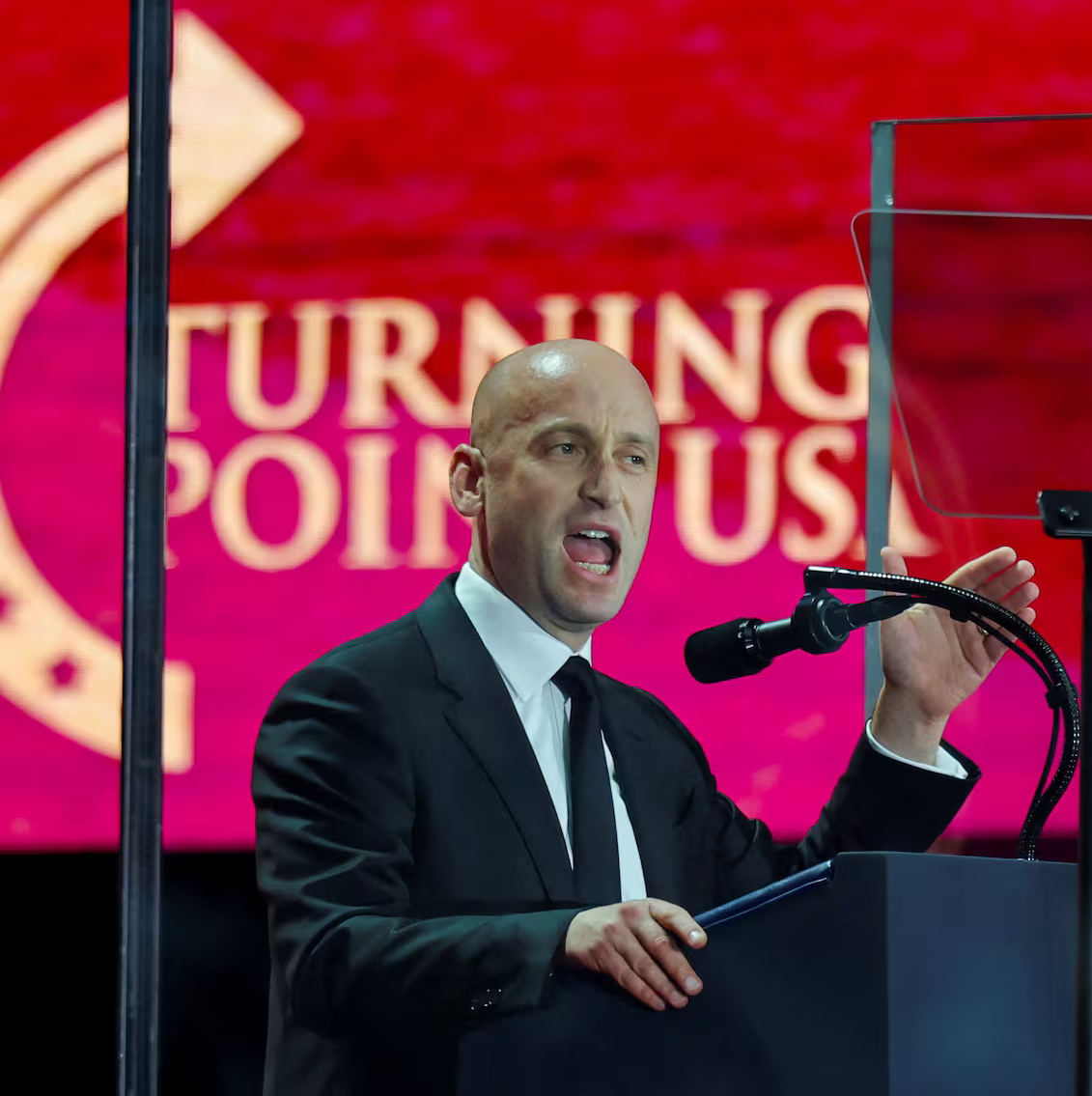
And then there was Stephen Miller.
Nothing brightens up a room like Stephen Miller’s absence. I’ve often wondered, how many times did Miller’s parents beg him to run away from home? Always grinding out hateful shit, and often, it’s difficult to tell which hole that shit is pouring out of.
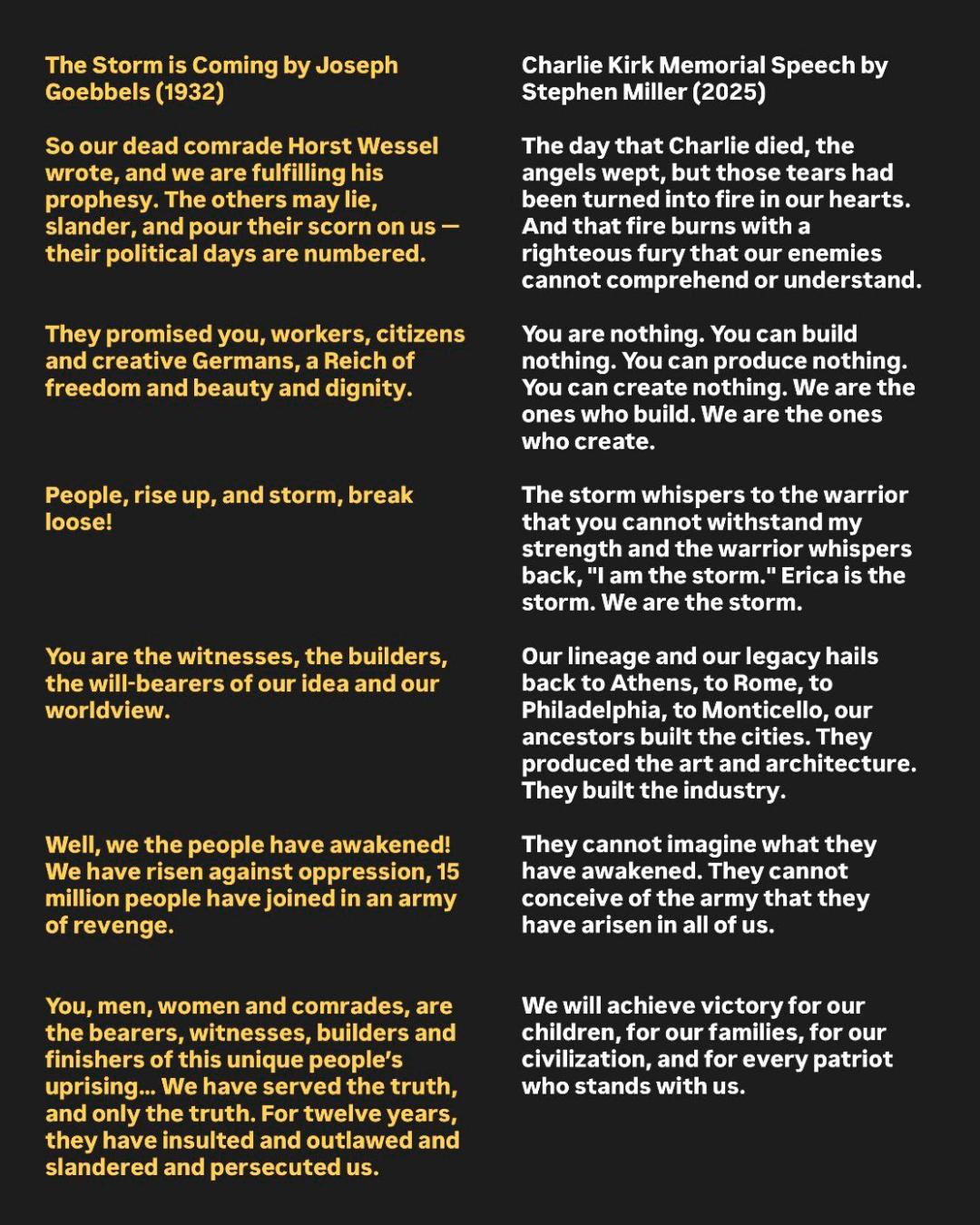
He’s not even original. Everything about him is borrowed, old, musty and rank. His words are pilfered from Joseph Goebbels, his cadence as well, he’s a fraud, a poser, a self-hating Jew whose hair abandoned him just like his parents should have.
Miller, much like everyone in Trump’s orbit…is a semi-polished hooker. Anything for money, anything for power, because underneath the ghastly exterior is a bitter, entitled toddler who would rather inflict pain and suffering because he once experienced it, rather than working hard to make sure no one has to experience it at all.
He is a zero-value human. He has nothing to offer humanity whatsoever.
Erika Kirk.
Received the sort of introduction Michael Buffer would bellow during a Wrestlemania main event, while dressed in…white.
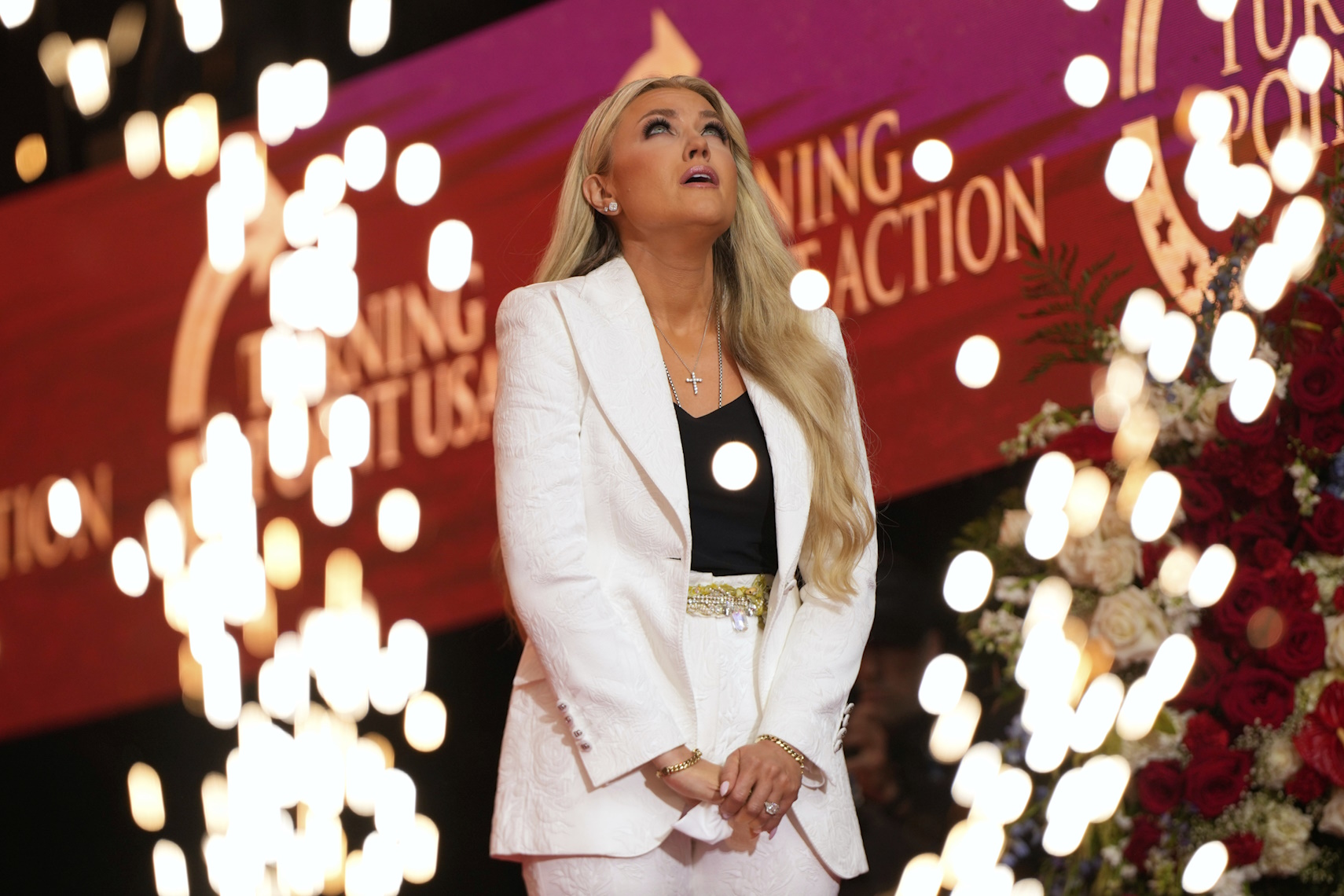
Not exactly the color of mourning but rather the gleaming, camera-tested white of redemption arcs and new management.
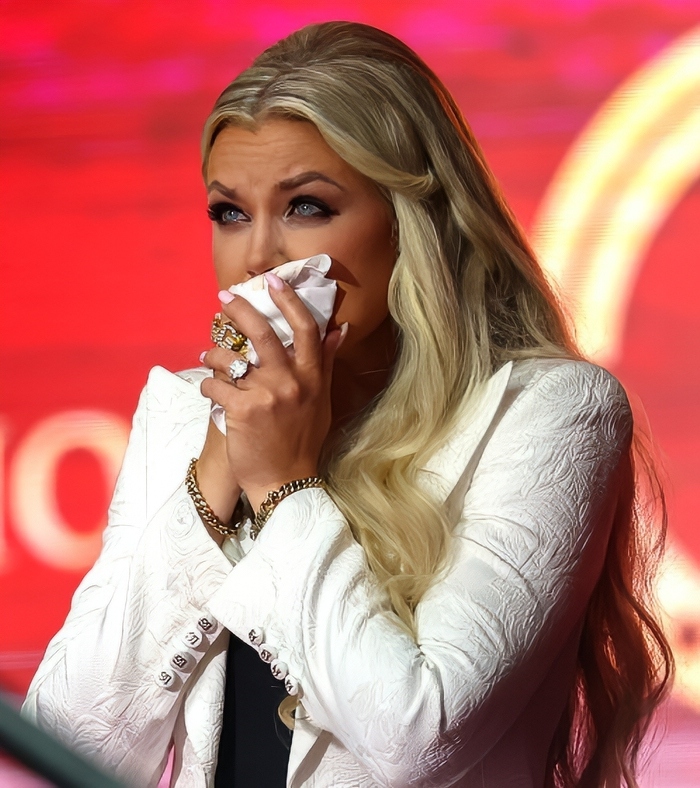
Under the floodlights she didn’t look bereaved; she looked beatified.
The crowd gasped, the cameras zoomed in tight, and somewhere an intern typed #AmericaFirst, #blessed, #Trump2028, and donation URLs.
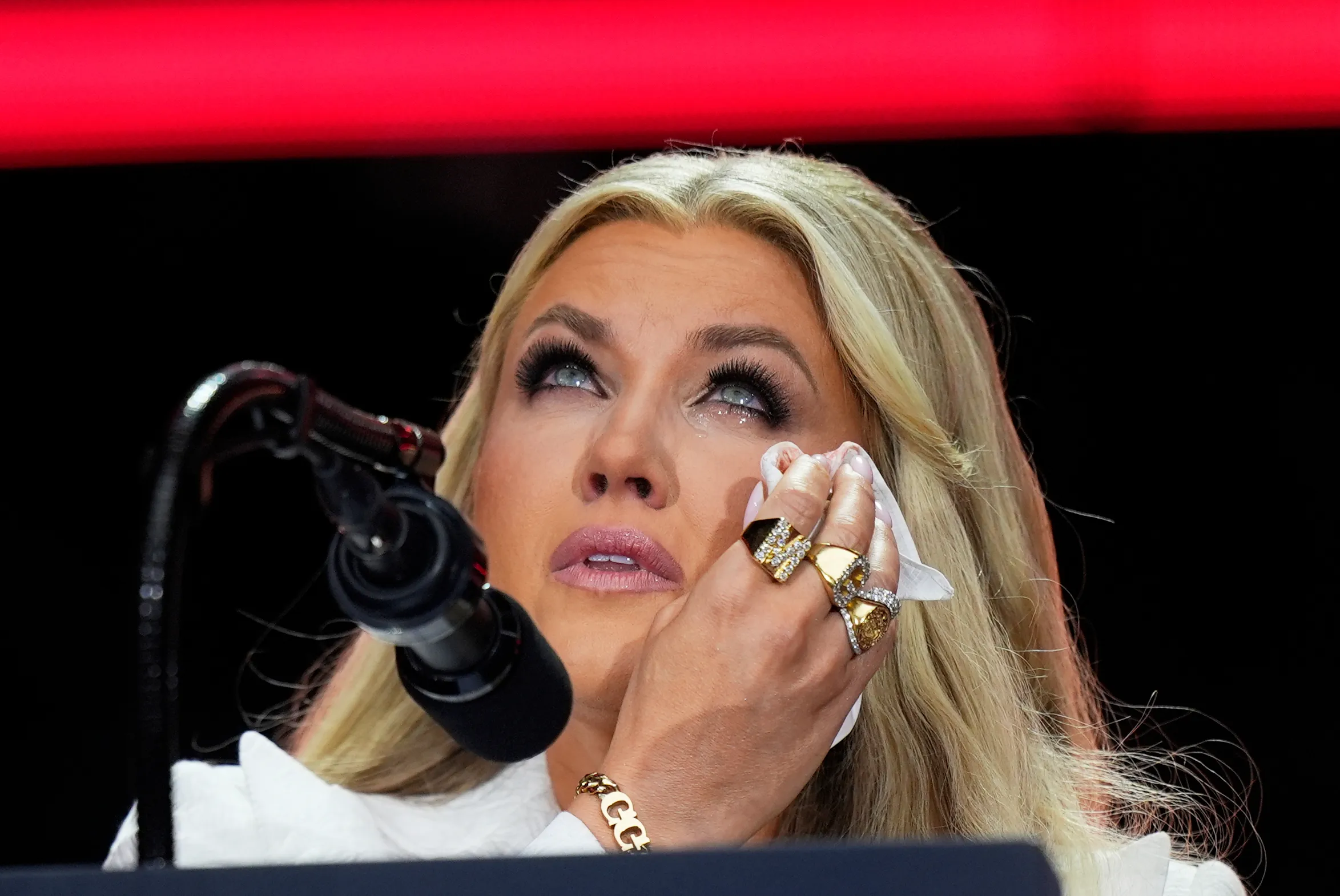
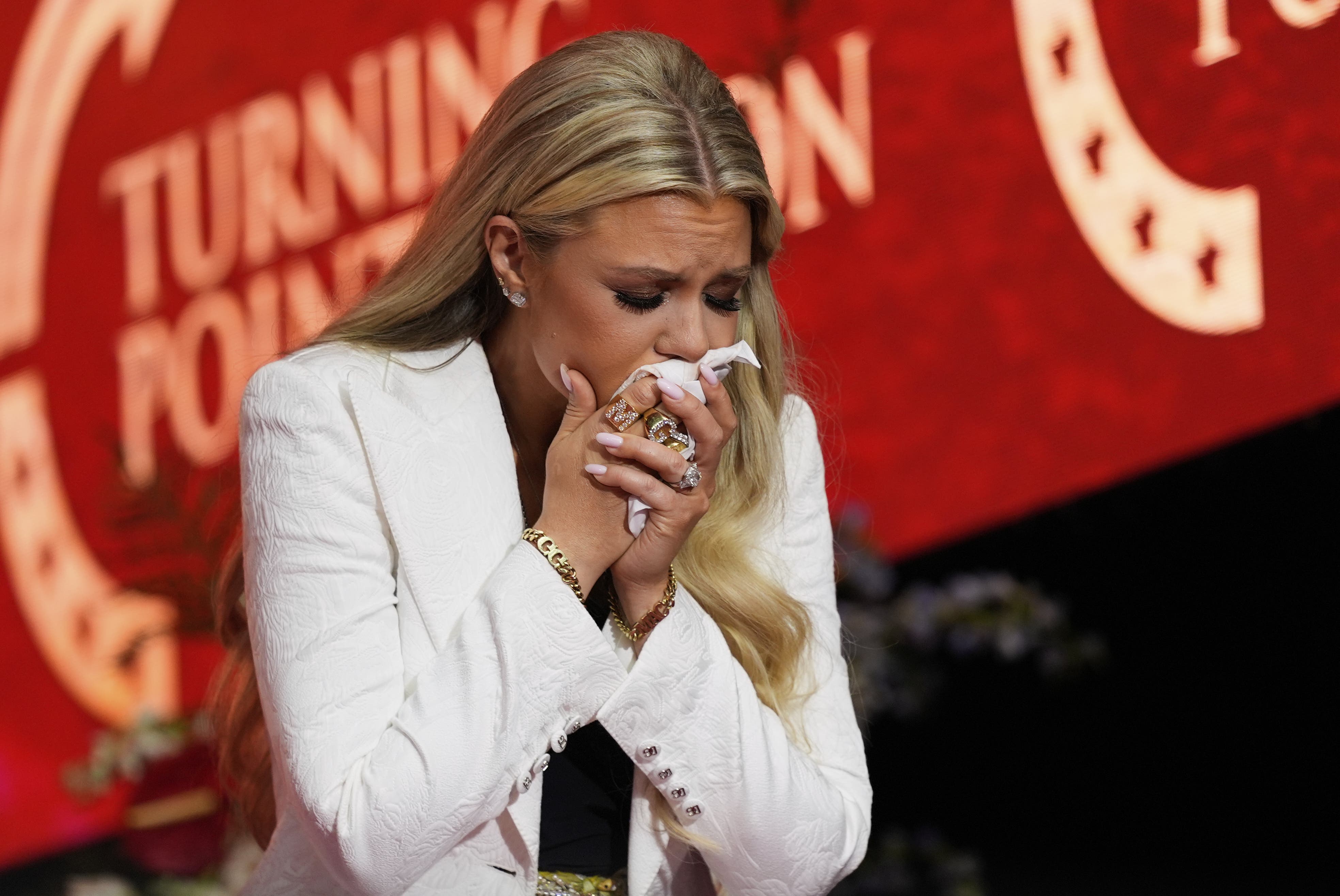
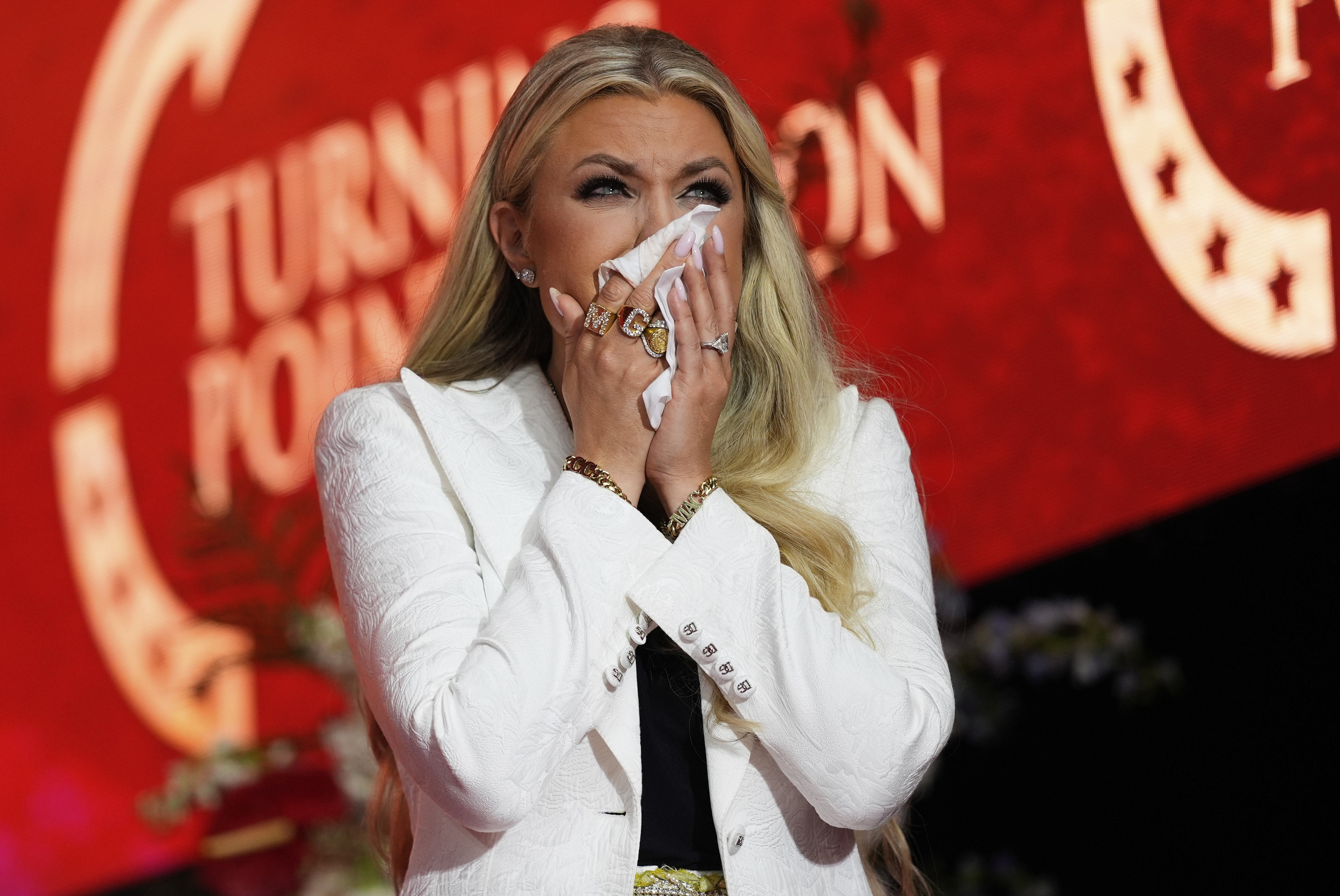
And there she was again with the tissue, that white flag of emotion.
Each dab was a metronome for collective sympathy.
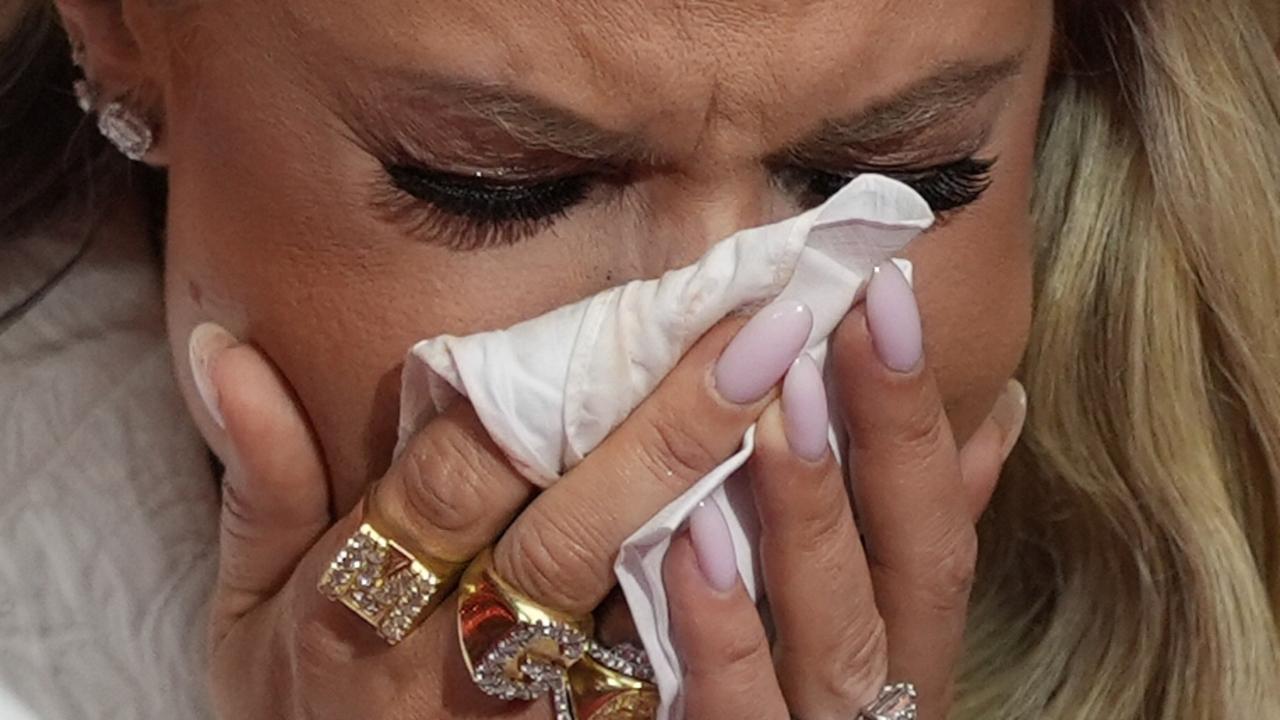
Not to catch tears, there weren’t many real ones, her bizarre, comical facial contortions, straining with all of her might, desperately trying to squeeze out more than a little dampness around her eyes.
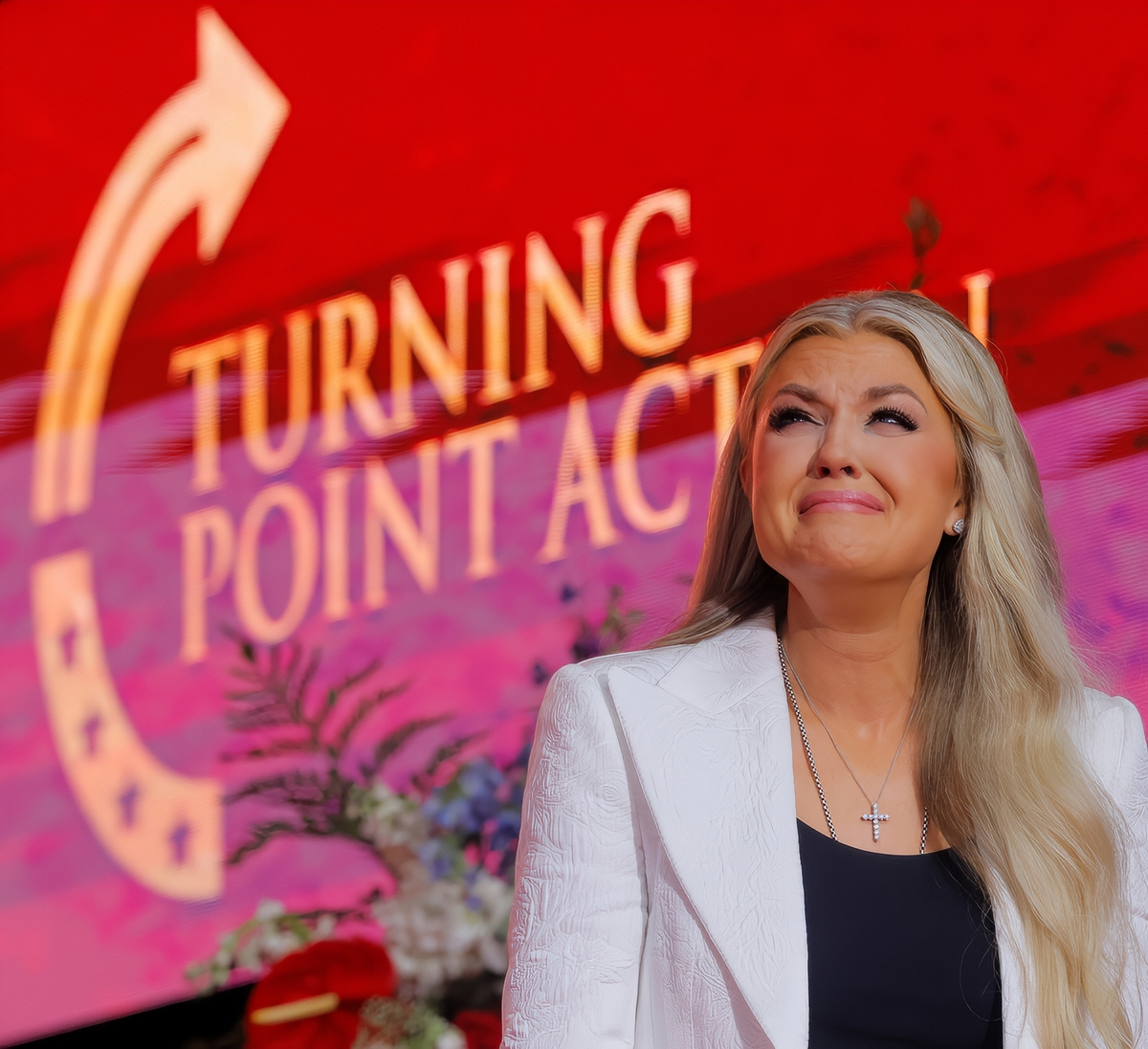
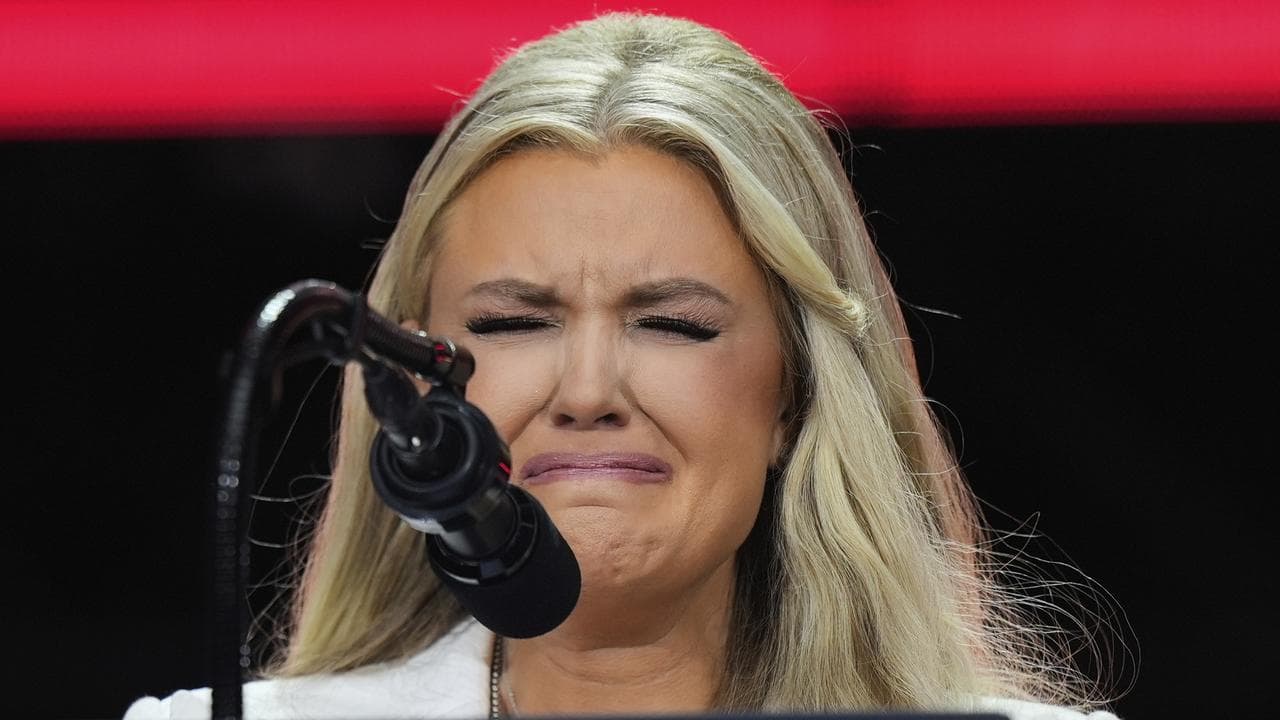
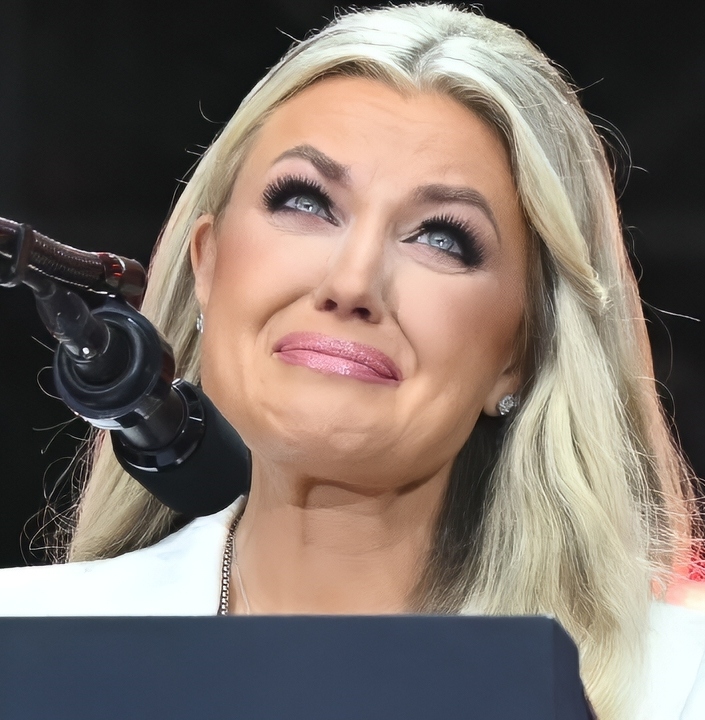
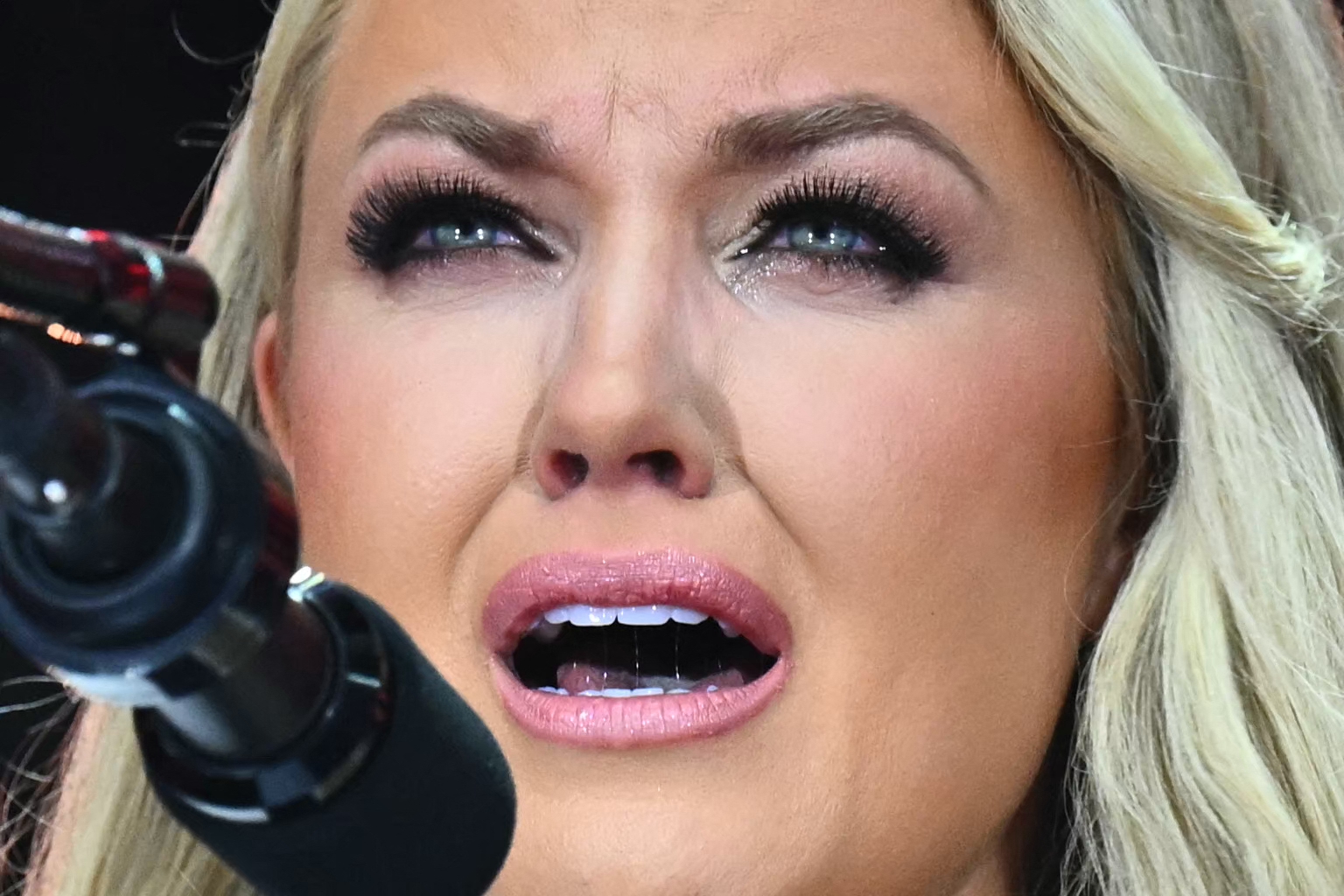
From the podium, she thanked the faithful, promised the mission would continue, and swore vengeance against those that took Saint Charlie from them, but, was just one guy that took St. Chuck. Just one guy, but sheep bleat because other sheep bleat and their was bleating aplenty. The applause was thunderous, grief for sale, standing ovation included!
Between acts, pyrotechnics crackled. Nothing says eternal rest like a fireworks display timed to the ex-President’s entrance.
It wasn’t a memorial; it was a product launch with better lighting and worse theology.
A narcissist cries not to feel, but to be seen feeling.
The Deceit…
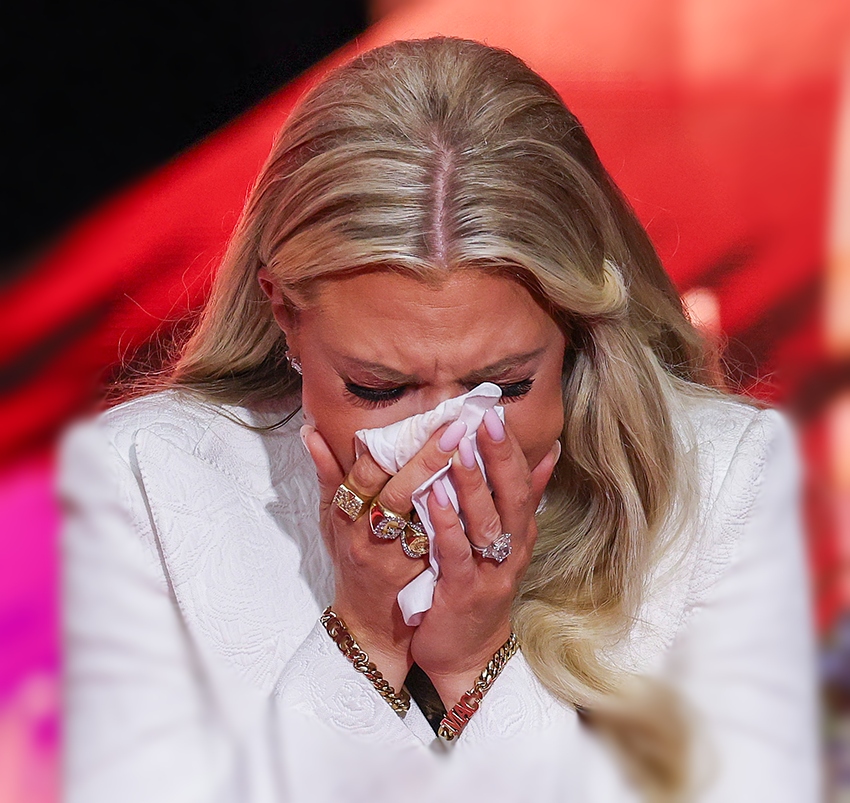
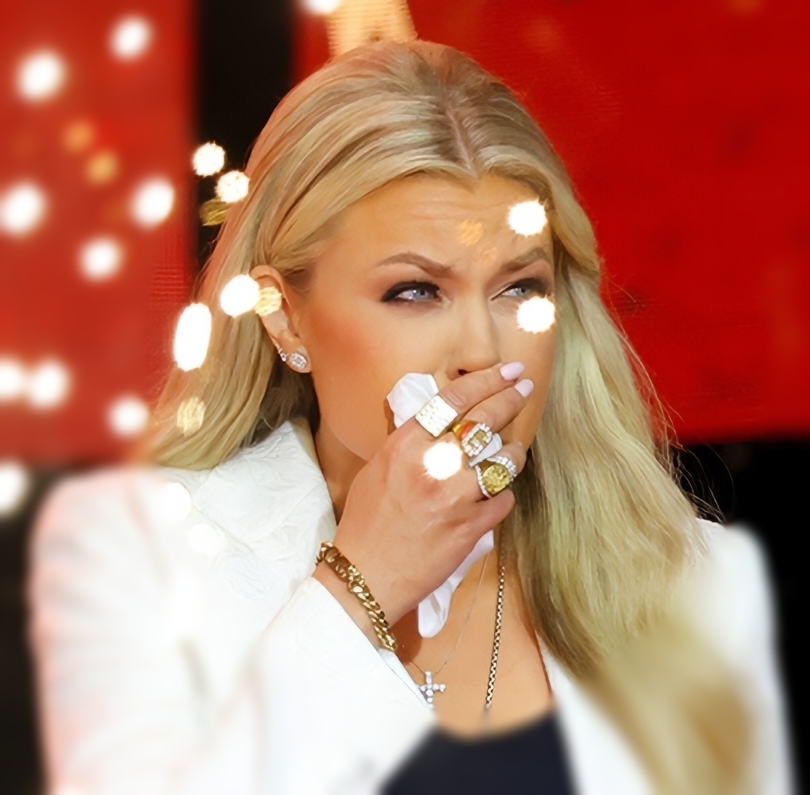
In theater, props exist for two reasons: to hide the truth and to make you believe you’ve seen it.
Erika Kirk’s tissue did both flawlessly, part relic, part performance-insurance.
It’s civilization’s oldest special effect. A single square of cotton and the audience fills in the rest. The tissue ascends, the crowd projects: There—see? She’s weeping.
The beauty of illusion is that it never needs water, only repetition.
Doesn’t take Walter White to spray, to rub, to soak tissues or a handkerchief with an irritant. Blot one’s eyes rough enough, create redness, eyes water. Except, Erika Kirk’s eyes didn’t water much at all.
Sometimes the tissue protects the investment; catch the rogue tear before it endangers the contouring. Sometimes it’s just a portable cue card that reads insert empathy here.
Either way, it’s the perfect accessory for emotional taxidermy.
You can tell a lot about a person by how they cry; you can tell even more by what they use to clean it up.
Her tissue never absorbed anything. It merely gestured toward sincerity, like a politician shaking an invisible baby.
The gesture itself was too careful, too light. Real grief smears. This one lightly dabbed.
The choreography never faltered: lift, blot, glance heavenward, resume monologue. Even the timing matched commercial breaks.
The tissue wasn’t there to dry tears. It was there to sell her grief to anyone too far away to notice the absence.
A white flag of emotion waved over a battlefield with no casualties.
Grief, once televised, ceases to be private.
The instant the lens blinks red, the mourner becomes a performer and the audience becomes the mirror that confirms the performance is working.
The handkerchief or tissue, white, folded, ever-present, anchors the act.
Each blot to the eye, each flutter to the nose, is a semaphore to the viewers: I feel; therefore, believe me.
But kinesically, the movement betrays more than it conceals.
Hand-to-face gestures usually appear when a person seeks comfort or concealment.
In true anguish, the hand sporadically, and randomly, covers the face, palms pressing against skin as if to keep the world out. You pay no mind to their placement.
In staged sorrow, the hand hovers, lightly touching, careful not to smudge.
Micro-timing: authentic gestures erupt simultaneously with the emotion.
Performative ones lag by half a beat, arriving when the dialogue calls for emphasis rather than when the feeling demands release.
Gaze aversion: real despair looks inward; the eyes lose focus.
Fabricated despair glances away only long enough to reset for the next line, ensuring the camera catches the “moment.”
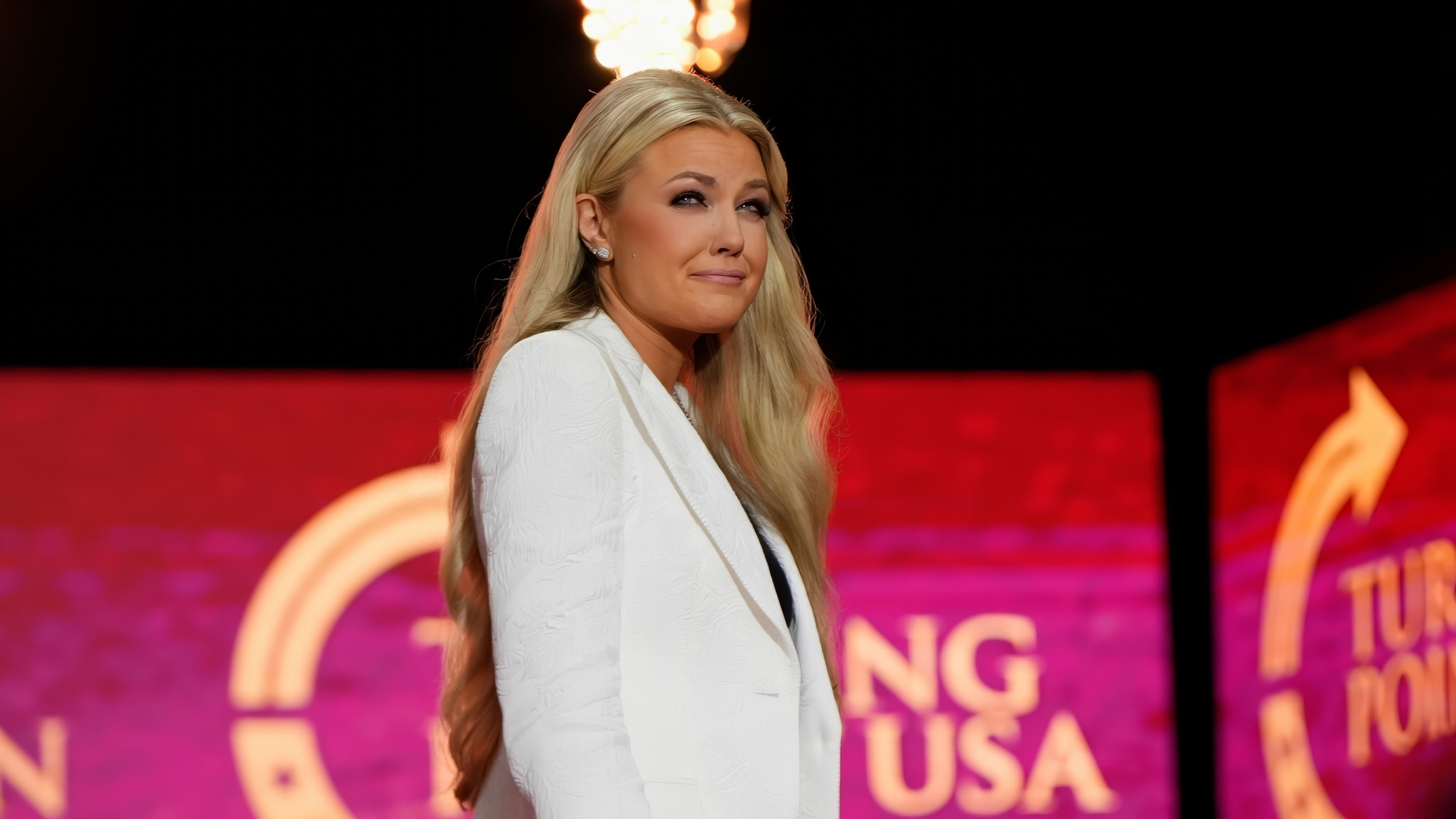
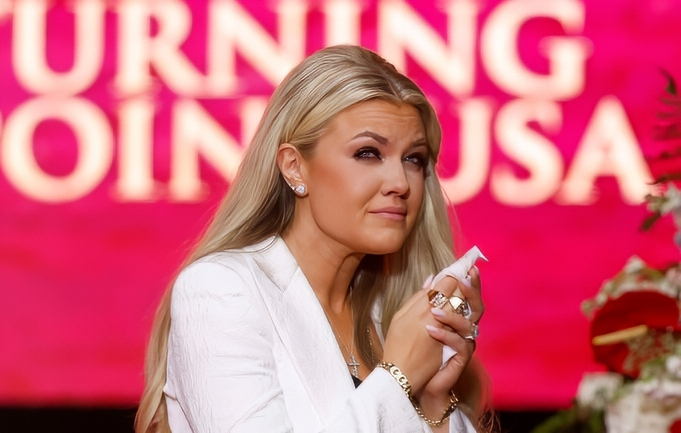
The tissue becomes a kind of halo - pure, fragile, symbolic.
It allows the performer to mask without appearing guarded, to occupy the aesthetic of collapse while maintaining control.
Every touch to the face becomes a cue for the audience to empathize, and empathy, once engaged, doesn’t ask for evidence.
It’s a transaction: she performs feeling; they feel on her behalf.
Then the machinery around her amplifies the illusion.
Clips circulate. Commentators praise the “strength through tears.” The network overlays soft light and swelling music. The algorithm learns that sorrow keeps viewers from scrolling. The audience, conditioned by a thousand televised tragedies, rewards the repetition. It isn’t deception so much as a feedback loop: the performance produces belief, belief demands performance.
And in that loop, authenticity dies quietly, suffocated not by malice, but by production value.
And if that person is as vain and egotistical as they appear, they’d put their appearance before any emotion, like not wanting to fuck up their makeup.
The human body is an unreliable liar. It can memorize scripture, but not sincerity.
Erika Kirk, like every practiced performer before her, trusted cosmetics over chemistry. Biology, however, always leaks.
Real emotion is a riot of involuntary betrayals: skin flush, pupils dilate, breath fractures, voice warps. Manufactured emotion is orderly, punctual, and camera-friendly.
The eyes were the first defect in the system.
No micro-creases at the corners, no reddening. Just static, like high-definition glass waiting for a cue. The tear ducts had clearly been downsized for efficiency.
A true cry wrinkles time; a fake one just fogs the lens.
Then the face: too symmetrical, too even. Real sadness folds the face like a bad map. Hers is a bad mask, an unskilled pantomime.
When the soul revolts, muscles lose choreography. When the ego performs, every grimace and wrinkle is a marionette, and Erika Kirk their puppet master.
And the body? Posture perfect. Shoulders squared for product shots. Real agony slouches. Faux agony poses.
If heartbreak has a stance, it isn’t power-stance.
The trick of performative crying is that it seeks not relief but approval. A real sob empties; a fake one replenishes, likes, shares, invitations, interviews.
A narcissist never wipes tears, only optics.
The Human Cost of Inhumanity…
A narcissist dies twice; first when the cameras stop, and again when the audience finally looks away.
What lingers now isn’t sorrow, it’s the moral static that hums when decency and disgust share the same frequency.
We are told that every human deserves dignity in death, even the ones who spent their lives stripping it from others.
That’s the gospel of civility: pretend the ledger balances if we speak softly enough at the funeral.
But morality, like grief, is messy when performed in public.
There’s a part of us, quiet and shameful, that doesn’t want to forgive.
It watches the Erika Kirk’s bullshit performance and thinks, Good. Let the mask stay dry.
Then another part, the one raised on mercy and manners, recoils at our own cruelty.
To humanize the inhuman is noble; to pity the pitiless is obscene.
So the question refuses to die:
If a person devotes their life to disrespecting and dehumanizing others, do they still deserve the gentleness they denied?
Does empathy lose its meaning when it’s extended to those who weaponized it?
Is withholding compassion justice, or just vengeance with special effects?
Maybe the truest punishment for such people is this:
We stop turning them into symbols, saints, or monsters.
We remember them exactly as they were; small, frightened, voracious for attention, and let that ordinariness, their irrelevance, damn them more than hate ever could.
Erika Kirk will go on selling the gospel of his ghost, and the audience will keep buying delusion by the unit.
The economy of grief demands it.
But for once, maybe we can refuse the purchase.
Maybe we can sit in the discomfort, let it burn, and finally admit that not every death deserves redemption.
You are not for sale…
#ProjectBlackbird